
Dog Spay Recovery: What to Expect During the Healing Process
Most dog spay recovery takes about 10 to 14 days, with the incision closing and the skin healing during that window. Many dogs start acting like themselves within two or three days, but internal healing continues well after their energy returns, so following your veterinarian’s discharge instructions for the full recovery period is essential. Spaying, also called an ovariohysterectomy or ovariectomy, is one of the most common surgeries performed on dogs. Even so, it’s still major abdominal surgery, and it’s natural for pet owners to feel a little nervous about the days that follow. Knowing what normal healing looks like makes it easier to relax, spot problems early, and help your dog through a smooth dog spay recovery. Spay recovery doesn’t have to be stressful. Windrose Animal Hospital in Cranberry Township, PA, walks you through each step, from pre-surgery bloodwork to your dog’s final incision check.
How Long Does Dog Spay Recovery Take?
Every dog heals at a slightly different pace, but most follow a fairly predictable timeline. Age, size, overall health, and the surgical technique all influence how quickly your pup bounces back.
The First 24 to 48 Hours
Right after surgery, your dog may seem sleepy, wobbly, or a little “off” as the anesthesia wears off. Some dogs whine, shiver, or seem restless the first evening. A reduced appetite and mild nausea are common during this stage. Most dogs are noticeably brighter by the second day, though they’ll still need plenty of rest. Your veterinary team will explain when and how much to feed during this early stage of dog spay recovery, since a full meal right after anesthesia can upset some stomachs.
Days 3 Through 7
This is often the trickiest part of dog spay recovery. Your dog may feel almost back to normal and want to run, jump, and play, yet the incision is still fragile. Many complications happen during this stage simply because a dog feels better than her body actually is. Following activity restrictions closely matters most here. A single leap off the couch or an enthusiastic zoomie session can strain internal stitches, so this is the week to be especially consistent with leash walks and supervised downtime.
Days 10 Through 14
By the end of the second week, the skin incision is typically healed. Many clinics schedule a recheck around this time to examine the incision and remove skin sutures or staples if they were used. Your veterinarian will let you know when your dog can safely return to normal exercise, play, and bathing.
Factors That Affect Healing Time
Puppies often recover faster than adult dogs, while larger breeds, dogs spayed during or near a heat cycle, and pets with underlying health conditions may need a little extra time. Laparoscopic spays, which use smaller incisions, can sometimes shorten the dog spay recovery period. Your veterinary team can tell you what to expect based on your individual dog.
The Spay Incision Healing Process: What Normal Looks Like
Checking your dog’s incision once or twice a day is one of the best ways to track her progress. Understanding what’s typical helps you avoid unnecessary worry while staying alert for genuine concerns.
Stages of Incision Healing
During the first few days, the body sends blood flow and healing cells to the area, which causes mild inflammation. Over the next week, new tissue forms and the edges of the incision knit together. By the two-week mark, the skin has usually sealed, although the deeper layers continue strengthening for several more weeks.
Normal Signs During Healing
A healthy spay incision may show:
- Slight pinkness or redness along the edges for the first few days
- Mild swelling that gradually decreases rather than worsens
- A small amount of bruising, especially in fair-skinned dogs
- A thin line of dried, clear-to-pink fluid in the first day or two
- Visible sutures, staples, or surgical glue, depending on the closure method
- A firm, small ridge beneath the skin as tissue rebuilds
Why Some Incisions Look Different
Veterinarians close spay incisions in different ways. Some use buried absorbable sutures that you won’t see at all, while others use external sutures or staples that need removal later. Ask your veterinarian which method was used so you know what the spay incision should look like throughout the healing process. Many owners find that the most reassuring part of dog spay recovery is seeing the incision look a little better each day. Taking a quick photo each day can also help you compare changes over time and share accurate updates with your veterinary team.
Signs of a Problem During Your Dog’s Spay Recovery
Most dogs heal without any trouble, but complications can happen. Catching them early usually means simpler treatment and a quicker return to normal.
Contact your veterinarian promptly if you notice any of the following:
- Redness or swelling that spreads or worsens after the first few days
- Discharge that’s cloudy, yellow, green, or foul-smelling
- Bleeding that continues or soaks through more than a few drops
- Gaps in the incision or missing sutures or staples
- A soft, fluid-filled lump under or near the incision
- Vomiting, diarrhea, or refusing food for more than 24 hours
- Pale gums, weakness, or unusual lethargy
- Constant licking or chewing at the surgical site
Emergencies That Can’t Wait
An incision that opens enough to show tissue underneath, pale or white gums, collapse, a swollen belly, or labored breathing all require immediate veterinary attention. If Windrose Animal Hospital is closed, go to the nearest emergency animal hospital.
Licking Is a Bigger Issue Than It Seems
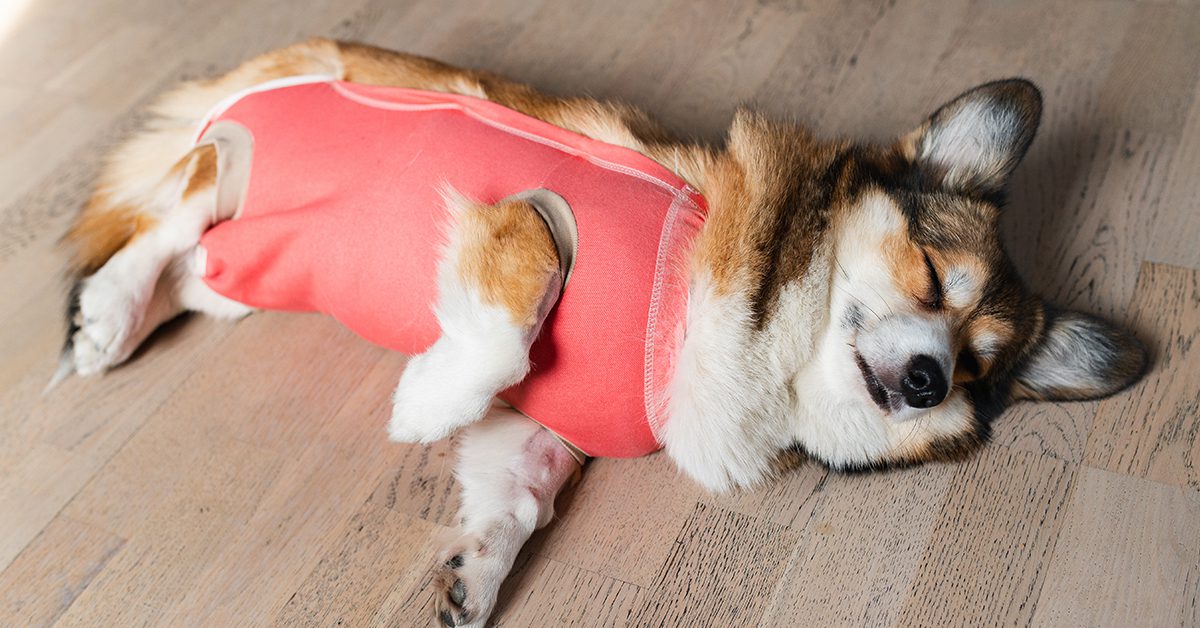
Licking introduces bacteria and can pull out sutures surprisingly fast. It’s one of the most common reasons a smooth dog spay recovery turns into a setback, which is why veterinarians so often send dogs home with a protective cone or recovery suit.
Helping Your Dog Through Spay Recovery at Home
Your veterinarian will provide detailed discharge instructions tailored to your dog, and following them closely is the most important part of a successful recovery. A little preparation also goes a long way toward keeping your pup calm and comfortable.
Common Recovery Recommendations
While every dog’s instructions are unique, veterinarians frequently recommend:
- Using an e-collar, soft cone, or recovery suit at all times
- Short, leashed bathroom walks only, with no running or jumping
- Avoiding stairs and furniture when possible
- No baths, swimming, or grooming until the incision is cleared
- Giving only the medications your veterinarian prescribes
- Attending the scheduled recheck appointment
Never give your dog human pain relievers, as many are toxic to pets. If you think your dog seems painful, call your veterinarian at Windrose Animal Hospital instead. Pain control is an important part of dog spay recovery, and your veterinary team can adjust the plan if needed.
Creating a Calm Recovery Space
Set up a quiet, comfortable area away from busy household traffic, other pets, and young children. A crate or small gated room can help limit activity. Food puzzles, snuffle mats, and gentle enrichment activities approved by your veterinarian can help a restless dog stay mentally engaged without stressing the incision.
Planning Ahead
Scheduling surgery for a time when you’ll be home for a few days makes dog spay recovery far easier. Picking up a properly fitted cone in advance and arranging help with walks can make the first week much less stressful for everyone.
Spay Surgery and Aftercare Support in Cranberry Township
A successful dog spay recovery depends on a strong partnership between you and your veterinary team. When you know what to expect, you can help your dog heal comfortably and recognize when something needs a closer look. Windrose Animal Hospital provides spay surgery, pain management, and attentive follow-up care for dogs throughout Cranberry Township. Our team sends every patient home with clear instructions and is always happy to answer questions at any point during dog spay recovery. If you’re planning to spay your dog or have concerns about her incision, call us at (724) 779-8300 to talk with our staff or schedule a visit.
Recent Posts
Finding a veterinarian you trust should feel easy—and so should booking an appointment. At Windrose Animal Hospital, we make caring for your cat, dog, or exotic pet simple, flexible, and stress-free with same-day scheduling and walk-ins always welcome.